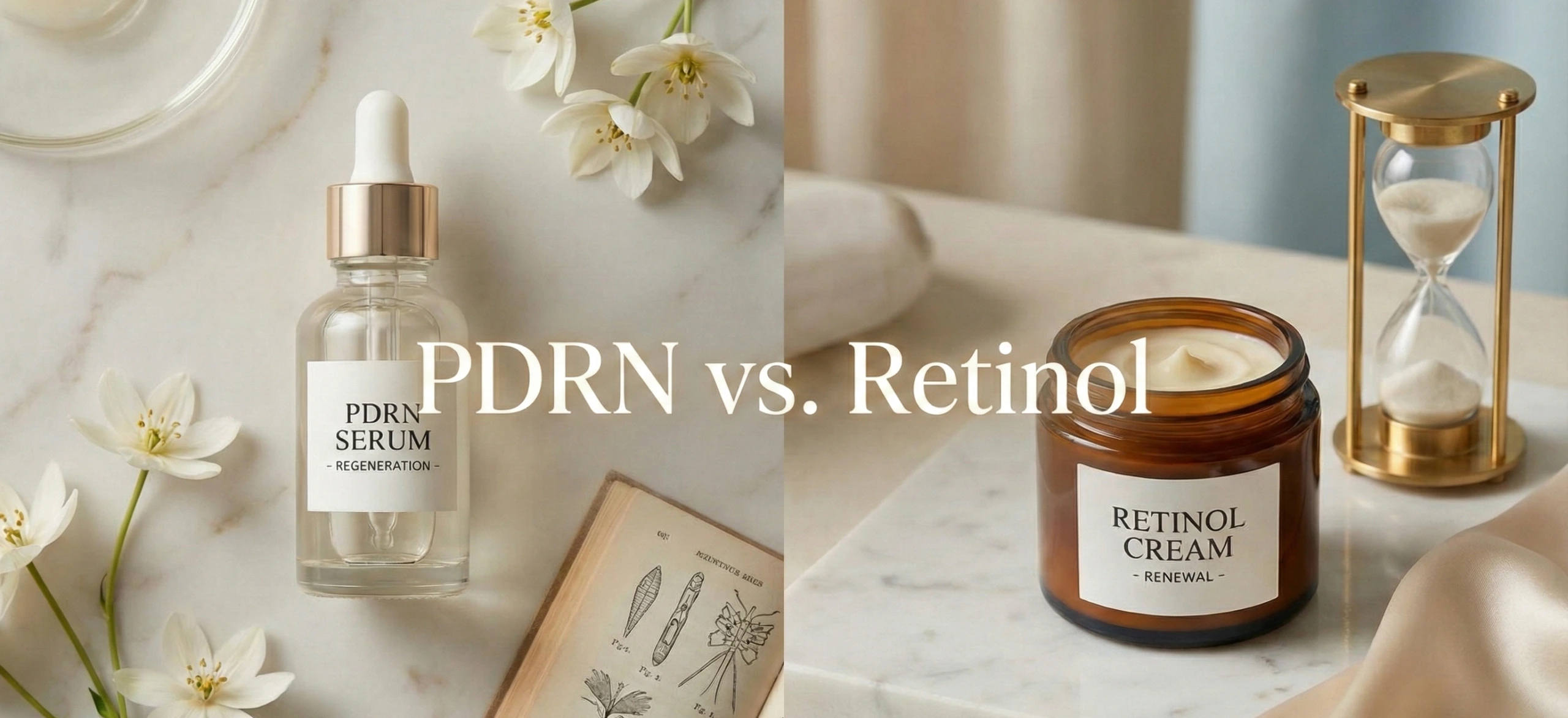
PDRN vs. Retinol: Which Anti-Aging Ingredient You Need? Can You Use Both?
The “Burn” vs. The “Build”
For decades, Retinol has sat on the Iron Throne of anti-aging. It is the gold standard, the dermatologist’s darling, and the only ingredient proven over 40+ years to reverse signs of aging.
But Retinol has a toxic trait: It hurts.
The “Retinol Uglies” purging, flaking, redness, and damaged barriers are almost a rite of passage. But what if you could get the anti-aging results without the trauma?
Enter PDRN (Salmon DNA). The K-Beauty challenger that claims to rival Retinol’s results but operates on a completely different biological philosophy.
Are they rivals? Or are they soulmates? If you are standing in the skincare aisle trying to decide between the “Gold Standard” (Retinol) and the “New Science” (PDRN), this guide is for you.
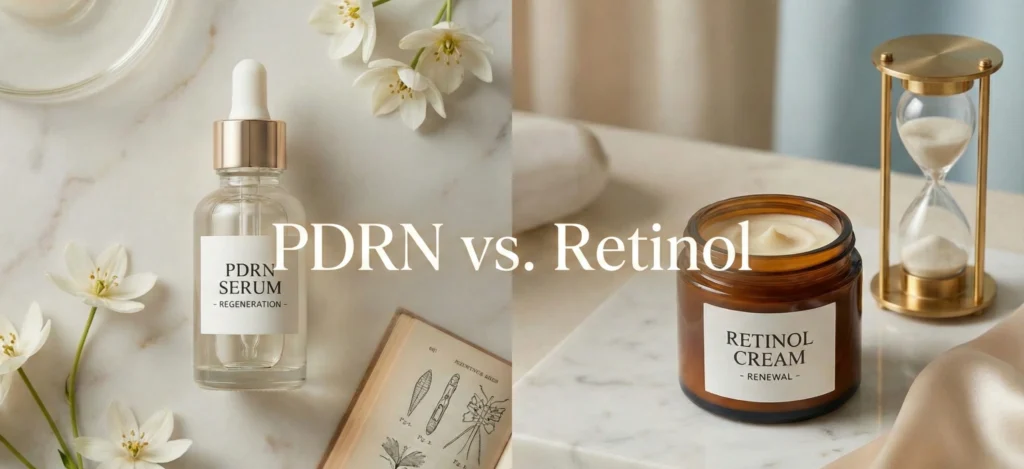
The Science: How They Work (It’s Completely Different)
To choose the right one, you have to understand the Mechanism of Action. They both aim for the same goal (youthful skin), but they take opposite roads to get there.
Retinol: The “Drill Sergeant” (Exfoliation & Turnover)
Retinol (Vitamin A) works by aggression. It speeds up your cellular turnover rate. It forces your skin cells to die and shed faster, revealing fresh, baby skin underneath. It stimulates collagen by “tricking” the skin into thinking it’s being repaired.
- The Vibe: “Out with the old, in with the new (fast).”
- The Risk: In the process, it often strips the lipid barrier, leading to chronic dryness and sensitivity.
PDRN: The “Architect” (Regeneration & Healing)
PDRN (Polydeoxyribonucleotide) works by nutrition. It does not exfoliate. Instead, it penetrates the dermis and activates adenosine receptors to heal damaged tissue and thicken the skin structure.
- The Vibe: “Let’s repair the foundation so the house stands stronger.”
- The Benefit: It reduces inflammation while in use. There is no peeling, only plumping.
Read More : What is PDRN in Skincare? The “Salmon DNA” Trend Explained (Science-Backed)
The Cheat Sheet: Retinol vs. PDRN
| Feature | Retinol (Vitamin A) | PDRN (Salmon DNA) |
| Primary Action | Accelerates Cell Turnover | DNA Synthesis & Tissue Repair |
| Main Benefit | Smooths texture, unclogs pores | Thickens skin, heals scars |
| Acne? | Best for Active Acne | Best for Acne Scars |
| Side Effects | Dryness, Purging, Sun Sensitivity | None known (Safe for sensitive skin) |
| Time to see results | 3–6 Months | 4–6 Weeks |
| Pregnancy Safe? | No (Generally Avoided) | Likely Yes (Consult Doctor) |
The “Power Couple” Glass Skin Strategy: Can You Use Both?
This is the secret most brands won’t tell you: You don’t have to choose. In fact, PDRN was practically born to fix the mess Retinol makes.
Why they work together:
Retinol thins the outer layer of the skin (stratum corneum) while thickening the dermis. However, the initial phase often wrecks your moisture barrier. PDRN is a barrier-repair specialist.6
The Protocol (Skin Cycling Method):
If you want the glass skin look, try this routine to get the resurfacing of Retinol with the healing of PDRN.
- Nights 1 & 2 (The Active Nights): Apply your Retinol. Let it do the heavy lifting of clearing pores and smoothing lines.
- Nights 3 & 4 (The Recovery Nights): Apply your PDRN Serum. This will calm the inflammation caused by the Retinol and speed up the collagen production without irritation.
PRO Tip: If you are a Retinol veteran, you can even layer them. Apply PDRN first (it’s usually lighter/water-based), let it absorb, and follow with Retinol. The PDRN acts as a buffer to reduce irritation.
The Verdict: Which One Should You Buy?
If you can only buy one, here is how to decide based on your skin’s specific biography.
Buy Retinol If:
- You have thick, oily, or resistant skin.
- Your main concern is active acne, blackheads, or very deep textured wrinkles.
- You want the most proven, long-term scientific data available.
Buy PDRN If:
- You have Rosacea, Eczema, or Sensitive Skin. Retinol is likely too harsh for you.
- You are trying to heal Acne Scars (indentations) or recent breakouts.
- Your skin feels “thin” or “crepey” and needs volume rather than exfoliation.
- You want a “glow” without the risk of a purge period.
Final Thoughts
The era of “no pain, no gain” skincare is ending. While Retinol isn’t going anywhere, PDRN offers a sophisticated alternative for those who believe skincare should be soothing, not stinging.
If your skin barrier feels like it’s on strike, put down the Retinol and pick up the Salmon DNA. Your future face will thank you.